
Radon Mitigation in Fort Collins and Larimer County, Colorado
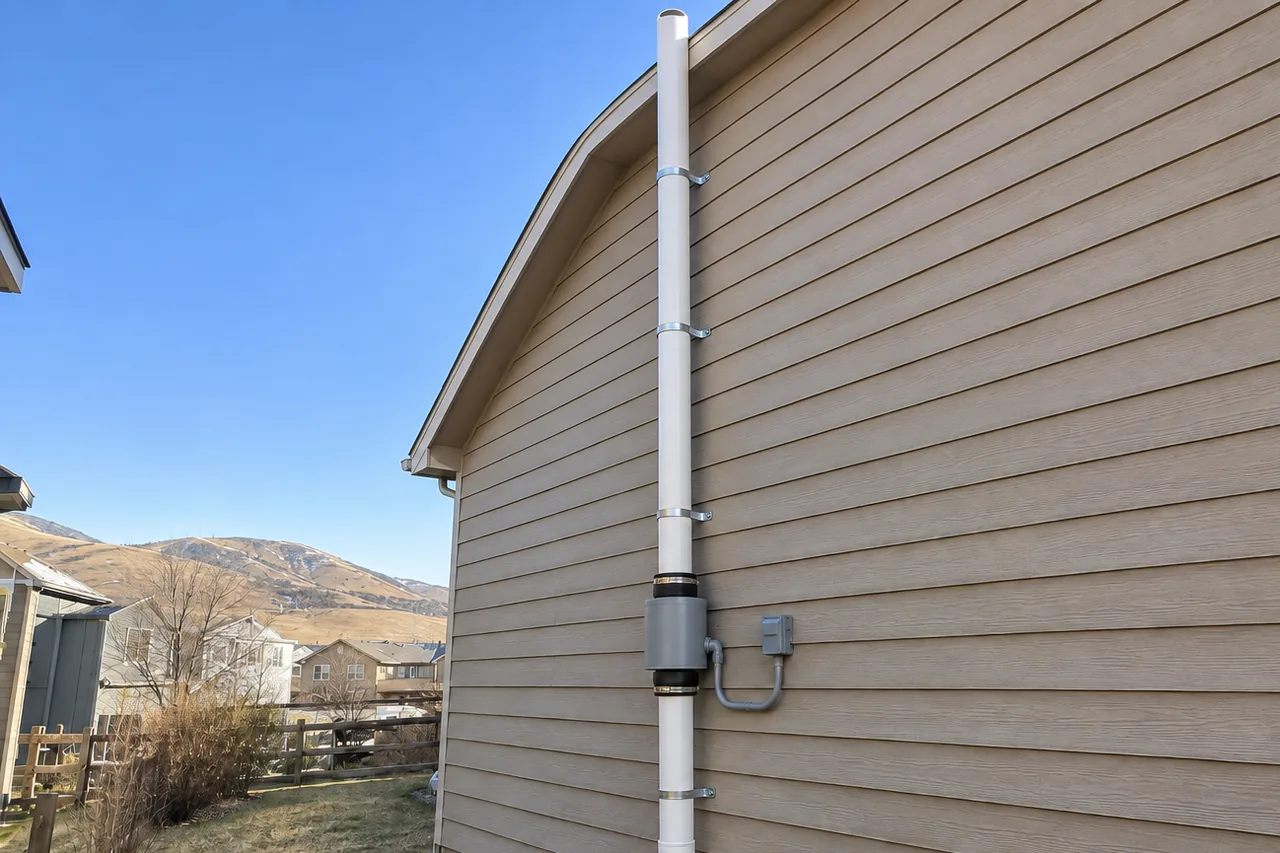
Did your radon test come back high, or has a home sale raised the question? Radon mitigation in Fort Collins and across Larimer County usually means a fan and a sealed pipe that pull soil gas from under the house and send it out above the roof. Colorado's health department says radon is "responsible for approximately 500 lung cancer deaths annually in Colorado." Call or send the form, and your request goes to one independent local contractor who can look at the house and put a price in writing.
- One contractor gets each request
- Rules and figures checked November 2026
Where a radon reading sits, in picocuries per liter of air (pCi/L)
0 to 8 pCi/L
- 0.4
- What EPA says is normally found in outside air
- 1.3
- EPA's figure for the average home
- 2 to 4
- EPA: "Consider fixing between 2 and 4 pCi/L"
- 4
- EPA's action level: fix the home at or above this
Only a test on your own house puts it on this scale. How to run one and read it.
How it works
-
Start with your reading
Tell us what your test showed, what the house sits on, and whether a sale is involved. No reading yet? The testing guide covers kits and how to run one.
-
One contractor gets it
Your request goes to a single independent contractor who works in the area, not to a list of companies.
-
A look and a written price
The contractor looks at the foundation and layout, then gives you a price in writing. A real number depends on the house, so it comes from that visit.
-
You decide
Hire them or don't. If you go ahead, the contract, permits, work and warranty are between you and the contractor. The hiring guide lists what to ask first.
What the local numbers say, and what they don't
Larimer County and Fort Collins both publish radon figures, and they run well above EPA's 1.3 pCi/L for the average home. They describe homes that were tested, though, not your house.
Colorado's own note on its statewide test records warns: "These data do not give us measures of actual radon levels." It adds that readings can vary widely between neighboring homes. A low test next door tells you nothing firm about your house, and neither does a high one. Only a test on your house answers the question.
| Figure | What it describes | Source |
|---|---|---|
| 7.8 pCi/L | Average the county lists for the area. It gives no year or sample size. | Larimer County health page, updated Nov 1, 2026 |
| About half | Fort Collins homes tested that reached 4 pCi/L. | City of Fort Collins radon page, undated |
| 7.1 pCi/L | Average across 6,900 existing Fort Collins homes. The year of the data isn't stated. | Larimer County presentation, undated |
Why health agencies push testing
Here is what the agencies themselves say about the risk, in their own words. A test on your house is what tells you whether it applies to you.
| Agency | What it says |
|---|---|
| U.S. Surgeon General, Jan 13, 2005 | "Indoor radon is the second-leading cause of lung cancer in the United States." |
| EPA, updated June 24, 2026 | "Radon is responsible for about 21,000 lung cancer deaths every year." And: "About 2,900 of these deaths occur among people who have never smoked." |
| Colorado Department of Public Health and Environment (CDPHE) | Radon is "responsible for approximately 500 lung cancer deaths annually in Colorado." |
| Colorado Department of Regulatory Agencies report, Oct 15, 2026 | About 44% of Colorado buildings have elevated radon, citing an Indoor Environments Association report card. |
| CDC, June 18, 2026 | Radon is "the second leading cause of lung cancer deaths in the United States." And: "There is no known safe level of radon." |
EPA's action level is 4 pCi/L, and it says to consider a fix between 2 and 4. Those are the working numbers for deciding what to do with a reading.
Radon guides for Larimer County homes
What the work involves on each kind of house, what the rules say, and what to ask. Each guide links to its sources.
Radon mitigation
How a system lowers radon, from the suction point to the exhaust above the roof. EPA calls sub-slab suction the most common method. The guide lists what a sound install includes: fan placement, a warning device, labels and a follow-up test. It also covers common mistakes, what a fan does to your power bill, and who it isn't for.
Testing and results
Short and long tests, closed-house rules, where to put the kit, and what readings of 2 and 4 pCi/L mean. It covers Fort Collins city kits, county kit drives and store-bought options, and notes where EPA and Colorado give different numbers. A retest table from the state tells you when to test again, with or without a system.
Basement systems
EPA calls suction through the slab the most common method. Sumps can be capped so they keep draining and can serve as the suction point, and drain tile or hollow block walls are other routes. The guide explains finished-basement routing questions, why EPA doesn't recommend sealing alone, and why finishing a basement calls for another test.
Crawlspace systems
EPA calls submembrane suction the most effective way to lower radon in a crawlspace home: plastic sheeting over the dirt, with a fan pulling from beneath it. Encapsulation is a different job at a very different price, and it isn't automatically a radon fix. The guide keeps the two apart and shows published costs for each.
Slab systems
With no basement or crawlspace, the suction point goes through the floor of the living space, so the pipe route becomes the main question. It can run up through the building or out through a wall and up the outside. The guide covers both neutrally, along with fan and exhaust rules and what to settle before work starts.
Passive systems
A pipe in a newer home isn't proof the radon is handled. Fort Collins' own 2006 test of 65 homes found open pipes cut readings by about half, with the average still above 4. The guide covers what county code has said, how to tell passive from active, and CDPHE's figure of about $500 to add a fan.
What it costs
Colorado agencies publish several price ranges, and they don't agree. This guide lays them side by side with sources and dates, then adds a state program's real results from 477 homes and clearly labeled national figures. It also covers low-income help through the state and works out what a fan costs to run on Fort Collins Utilities rates.
Hiring guide
A radon system comes down to where the suction point, pipe, fan and exhaust go, and whether the follow-up test shows it worked. The guide lists questions to ask about each of those, what a contract should spell out, EPA's timing for the follow-up test, and what agencies say about doing it yourself.
Radon in a home sale
Since August 2023, Colorado sale contracts carry a bold radon warning, and sellers pass along what they know: past tests, levels found, any system, and a state brochure. The guide explains what that means for buyers and sellers, what to do when an inspection reading comes back high, and what landlords owe tenants, with the statute cited.
What drives the cost
Published sources point to three things: the foundation type, the home's size and layout, and what CDPHE calls "difficult design problems." Nobody can price your house from a chart, and no local contractor prices appear on this site. A number you can rely on comes from a look at the house, in writing.
The state also runs a low-income assistance program. It works separately from this site, so apply to CDPHE directly.
| Colorado figure | Source |
|---|---|
| $1,000 to $2,000 | CDPHE testing page, undated, more for difficult designs |
| $1,300 to $3,000 | CDPHE FAQ, undated, existing single-family homes |
| About $1,200 on average; $800 to $2,500 | Colorado Department of Regulatory Agencies report, Oct 15, 2026 |
| $1,892 on average; $495 to $5,800 | CDPHE program data, Apr 24, 2024: 477 low-income jobs, not a market quote |
Options by type of house
These are the methods in EPA's Consumer's Guide to Radon Reduction. What fits your house is for the contractor's design to show.
| If the house has | Method EPA describes | Guide |
|---|---|---|
| A basement or slab floor | Sub-slab suction, which EPA calls "the most common and usually the most reliable" method. Often one suction point is enough. | Basement, slab |
| A sump | A capped sump can keep draining water and serve as the suction location. | Sump |
| Drain tile or hollow block walls | Drain tile suction or block-wall suction. | Other routes |
| A dirt-floor crawlspace | Submembrane suction, with plastic sheeting over the earth. | Crawlspace |
| A passive pipe from the builder | Test first. EPA says at 4 pCi/L or higher, a fan should be added. | Passive |
EPA treats pressurization as an option only after the common methods, and natural ventilation as a temporary step. It does not recommend sealing alone.
Areas served
Requests are welcome from homeowners across Larimer County and nearby towns, including these places. The phone numbers are each building department's, for asking about permits. Permit rules vary, so ask before work begins.
- Fort CollinsBuilding Services 970-416-2740
- LovelandBuilding Division (970) 962-2505
- WindsorPermit technician 970-674-2436
- SeverancePermit clerk 970-686-1218
- TimnathBuilding Services 970-449-4639
- WellingtonBuilding 970-821-5078
- BerthoudBuilding 970-532-2643, option 3
- Unincorporated Larimer CountyBuilding Division (970) 498-7700
Common questions
My test came back high. Do I retest or call someone?
EPA's steps start with a short-term test, then a long-term or second short-term test, then a decision. CDPHE's guide says the same for 4 pCi/L or higher: confirm, then mitigate. If the house already has a system, it says to contact a mitigation professional. The hiring guide lists what to ask one.
Is 3 pCi/L worth fixing?
EPA says "Consider fixing between 2 and 4 pCi/L." CDPHE's guide for 2 to 3.9 suggests considering a long-term test or a retest in five years. That range is a judgment call for your household.
My neighbor's test was low. Does that apply to me?
No. Colorado's data notes say readings can vary widely between neighboring homes. Run a test on your own house.
Do I need a permit?
Permit rules vary, and no local page reviewed for this site says whether adding a radon system to an existing home needs one. Larimer County's health page says to check with your building department before changing a foundation or electrical system. The numbers are listed under Areas served above.
Can I do it myself?
CDPHE says you "might be able to do sub-slab depressurization yourself," given good handyman skills, including electrical wiring. Larimer County warns that do-it-yourself systems "may not meet local building codes." The hiring guide covers both sides.
Is there help paying?
The state's Low Income Radon Mitigation Assistance program may cover some or all of the installation for eligible households. Check with CDPHE on current openings. See the cost guide.
Sources for this page
- EPA, A Citizen's Guide to Radon and Consumer's Guide to Radon Reduction.
- CDPHE, radon program, testing page, FAQ and low-income assistance (© 2026, undated); state radon dataset notes (undated).
- Local figures and agency statements are linked in the tables above.
Got a radon reading to act on in Larimer County?
Call or send the short form. Your request goes to one independent local contractor, who can look at the house and put a price in writing.